What Do Racing Drivers Think About During a Lap?
Whether you’re a weekend trackday enthusiast or a keen F1 follower, you might wonder: what's really going through a driver’s head during a lap? Motorsport commentators often talk about split-second decisions and razor-sharp focus, but what does that look like in cognitive terms? How do drivers manage their attention and emotions to perform at their best, especially under immense pressure?
Drawing on psychology, driver coaching wisdom, and practical examples, this article will take you behind the visor. We'll explore how top drivers balance arousal, manage working memory, control breathing, and keep their focus external and process-oriented — all while fighting off intrusive thoughts that could wreck their lap.
The Inverted-U Arousal Curve and Performance Band
A crucial concept for understanding mental states in racing is the inverted-U arousal curve. This psychological model, referenced in multiple performance guides including GOV.UK mental health and performance pages, shows that both too little and too much arousal (or stress) reduce performance. There’s an optimal "sweet spot" where arousal enhances concentration and reaction time — the driver’s ideal performance band.
Arousal Level Effect on Performance Common Driver Experience Low arousal (under-stimulated) Reduced alertness, slow reactions Easy or boring laps, losing focus Optimal arousal (performance band) Peak focus, quick decision-making Competitive racing, great laps High arousal (over-stimulated) Anxiety, muscle tension, errors Pressure moments, fear of failureDrivers who can consistently stay in that performance band during a lap tend to set the fastest, cleanest times. They also manage their emotional state pre-session and lap-by-lap to avoid 'going too high' on adrenaline or losing focus through boredom.
Pre-Session Routine: Managing the Mind’s Workload
Preparing for a session is never just about getting strapped in. For many drivers, the pre-session routine is a deliberate tool to organise thoughts and reduce mental clutter — in other words, managing the brain's working memory.
Why does this matter? Working memory has limited capacity. If intrusive or irrelevant thoughts sneak in right before the race, they can displace key procedural memories like braking points and shifting patterns — crucial for executing a perfect lap.
Established routines provide stability and predictability, calming the mind and carving out clear mental space for focus. Common elements include:

- Checking and visualising braking markers and apexes (external, concrete references)
- Physical warm-up or movements to settle nerves
- Simple checklists (helmet, gloves, radio)
- Psychological cues or mantras focused on the process (“follow the markers,” “smooth inputs”)
These routines reduce intrusive thoughts and ease the transition into a focused, external attention state where the driver is tuned into the track, car feedback, and racing conditions.
Extended-Exhale Breathing: A Quick Physiological Shift
Once in the car, managing physiology remains vital. One straightforward, evidence-based technique is extended-exhale breathing. By controlling breath length—especially lengthening the exhale—drivers can initiate a rapid shift to parasympathetic nervous system dominance, effectively switching off adrenaline-driven stress.
This isn’t new-age hype; the GOV.UK guidance on mental well-being at work highlights deep breathing as a practical, accessible tool for acute stress relief.
Drivers often take a few such breaths in the moments before lights out or an out-lap, gently lowering heart rate and muscle tension without losing alertness. This physiological reset helps them hit or maintain the optimal arousal band required for consistent, confident driving.
External Process-Focused Attention Versus Outcome Focus
One pitfall motorsport mental coaching guide to avoid in any high-pressure sport is getting mentally stuck on outcomes. In racing terms, that's obsessing over lap times, sector splits, or finishing positions during a lap. Ironically, this outcome focus often detracts from performance.
Why? Because focusing too much on the “result” shifts internal attention onto worries, self-judgement, or “what-if” scenarios. This internal awareness distracts from the real-time demands of the task: steering, braking, accelerating, and reacting to changing track conditions.
Instead, drivers train to adopt an external process focus. What does this look like practically?
- Monitoring braking markers rather than “Did I brake too late?”
- Feeling how the car grips on turn-in instead of thinking “I can’t afford a mistake here.”
- Planning smooth, consistent inputs rather than obsessing on shaving tenths off a lap time
This aligns attention directly on actionable cues, not distracting inner dialogues. By keeping attention external and process-focused, drivers reduce the chance of self-talk or intrusive thoughts interfering with performance.
The Role of Braking Markers
Braking markers are prime examples of external attention anchors. Drivers usually memorise a series of visual cues — be it a painted line, a tree, or a kerb — to trigger exactly when and where braking should start. During the lap, these markers serve as checkpoints for process, not performance judgement.
For example, instead of thinking, “Am I braking too late?”, the thought becomes simply, “Brake at this marker.” This keeps cognition lean and task-focused, helping maintain rhythm and flow, which are essential for fast, consistent laps.
Dealing with Intrusive Thoughts on Track
Despite best efforts, all drivers experience intrusive thoughts from time to time—those unhelpful, off-task distractions. Common examples include:
- “What if I crash?”
- “This lap better be good, or I’ll lose my seat.”
- “I’m slower than my teammate.”
- “Are the engineers watching me?”
Rather than trying to "just suppress" these thoughts—a strategy proven to backfire—they learn to acknowledge https://reliabless.com/why-breathing-exercises-dont-fix-my-anxiety-long-term/ and redirect them using mental techniques. Coaches often recommend:
- Noticing the thought without judgement (“That’s a ‘what if’ thought.”)
- Refocusing on a fixed external cue like the next braking marker or a specific steering input
- Using brief process-based affirmations to gently guide attention back (“Brakemarker coming, smooth pressure.”)
This way, drivers don’t waste precious mental bandwidth fighting distractions; they move through them with minimal impact on lap performance.
Summary: What’s Racing Through a Driver’s Mind?
In essence, during a lap you can think of a racing driver’s cognition as a finely tuned machine balancing:
- Arousal level management: Staying in the optimal zone—not too anxious, not too relaxed.
- Working memory control: Using pre-session routines to load useful information and reduce clutter.
- Physiological regulation: Employing techniques like extended-exhale breathing to calm nerves.
- Attention control: Focusing externally on process-based cues — braking markers, car feedback — rather than internal outcome worries.
- Intrusive thought management: Recognising and swiftly redirecting unwanted mental distractions.
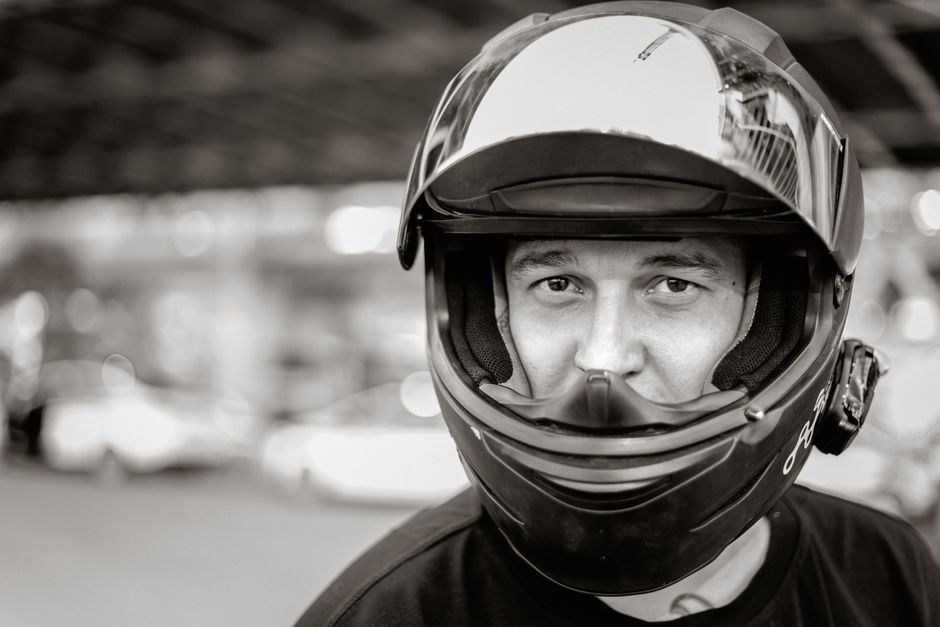
Watch any professional racecar driver in their headset, and you’ll see this ongoing mental balancing act at work, often without the driver even realising the precise cognitive gymnastics involved. And it’s not just for the pros — club drivers, track day enthusiasts, and sim racers can also learn from these proven focus strategies to improve laps and enjoy the experience more.
Sharing and Discussion
If you found this inside look at racing drivers’ minds interesting, feel free to share it on your favourite social platform:
- Twitter/X
Let us know: what’s your go-to mental trick before or during a lap? Drop a comment or join over on Reddit’s r/motorsports for more fan and coach insights!